|
 |
| |
|
|
| |
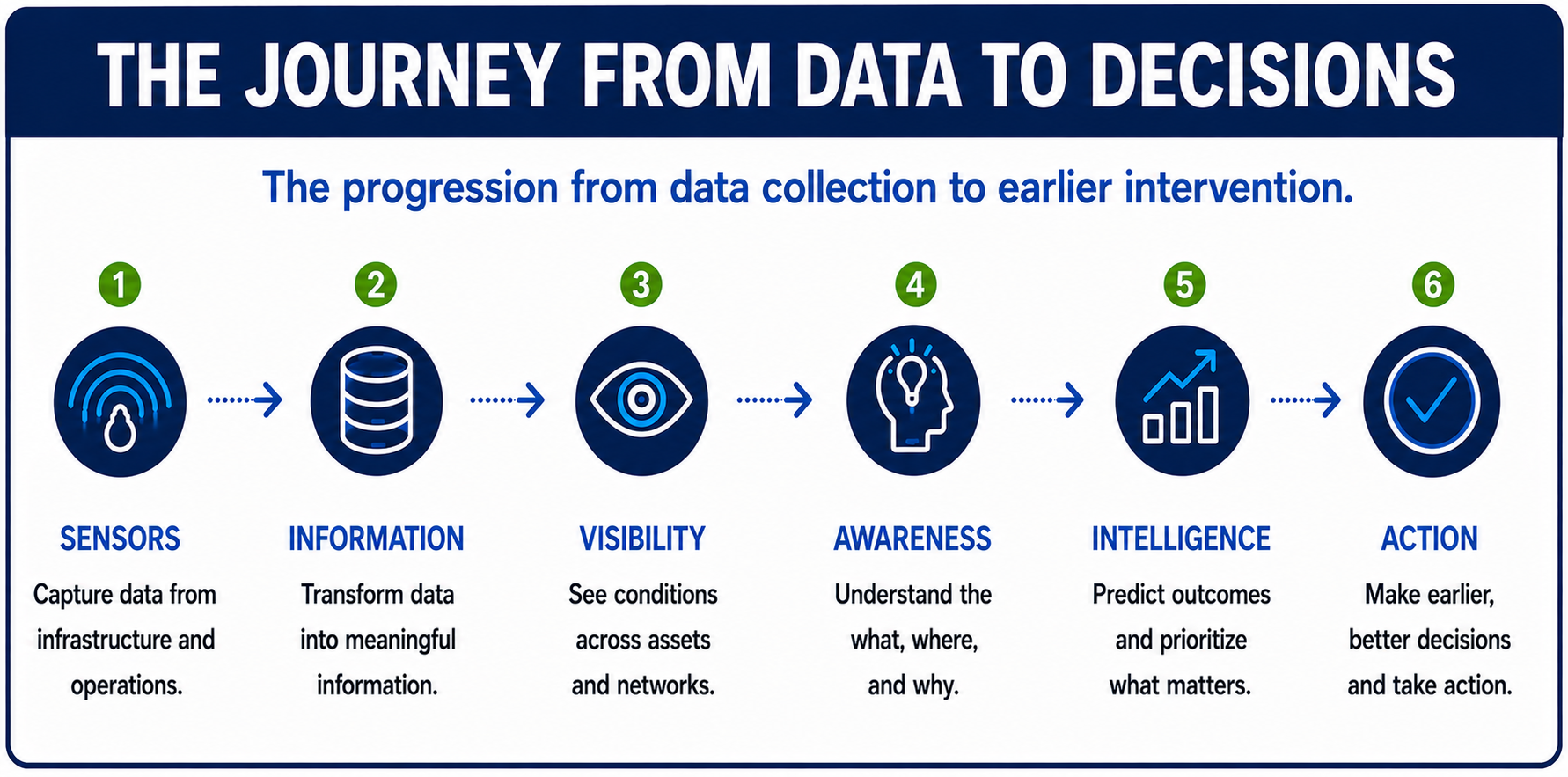
The objective isn't collecting more data. It's making faster decisions that help prioritize action. |
|
| |
|
|
| |
 |
|
| |
|
|
| |
The greatest value comes from integrating multiple inspection technologies into a common operating environment that provides greater context and enables earlier intervention. |
|
| |
|
|
| |
For decades, railroads have invested in technologies that improve the collection of infrastructure data from track geometry systems and imaging platforms to LiDAR, wayside detectors, and other inspection technologies. |
|
| |
|
|
| |
Today, the challenge is no longer collecting data.
The challenge is transforming that data into actionable intelligence. |
|
| |
|
|
| |
Railroads now have access to more information than ever before, yet maintenance teams continue to face increasingly complex decisions. Limited maintenance windows, growing network demands, and constrained resources require more than additional measurements. They require earlier visibility into emerging conditions and better decision support.
|
|
| |
|
|
| |
The question is no longer how much data railroads can collect, it’s how quickly they can turn that data into better decisions. |
|
| |
|
|
| |
| |
|
|
| |
Solving the Next Generation of Inspection Challenges |
|
| |
|
|
| |
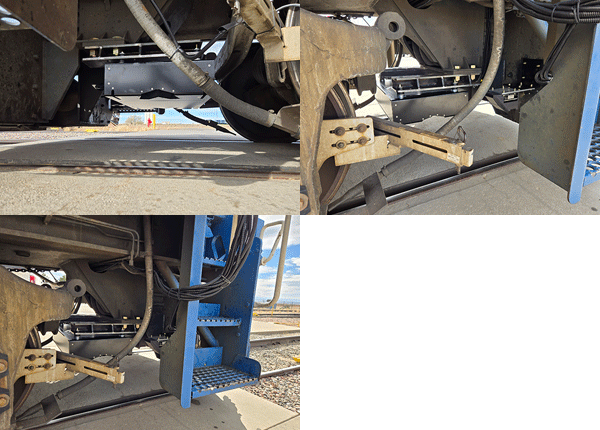
One example of this evolution is the growing need for inspection technologies that can be integrated onto modern locomotives without sacrificing onboard space or operational flexibility.
|
|
| |
|
|
| |
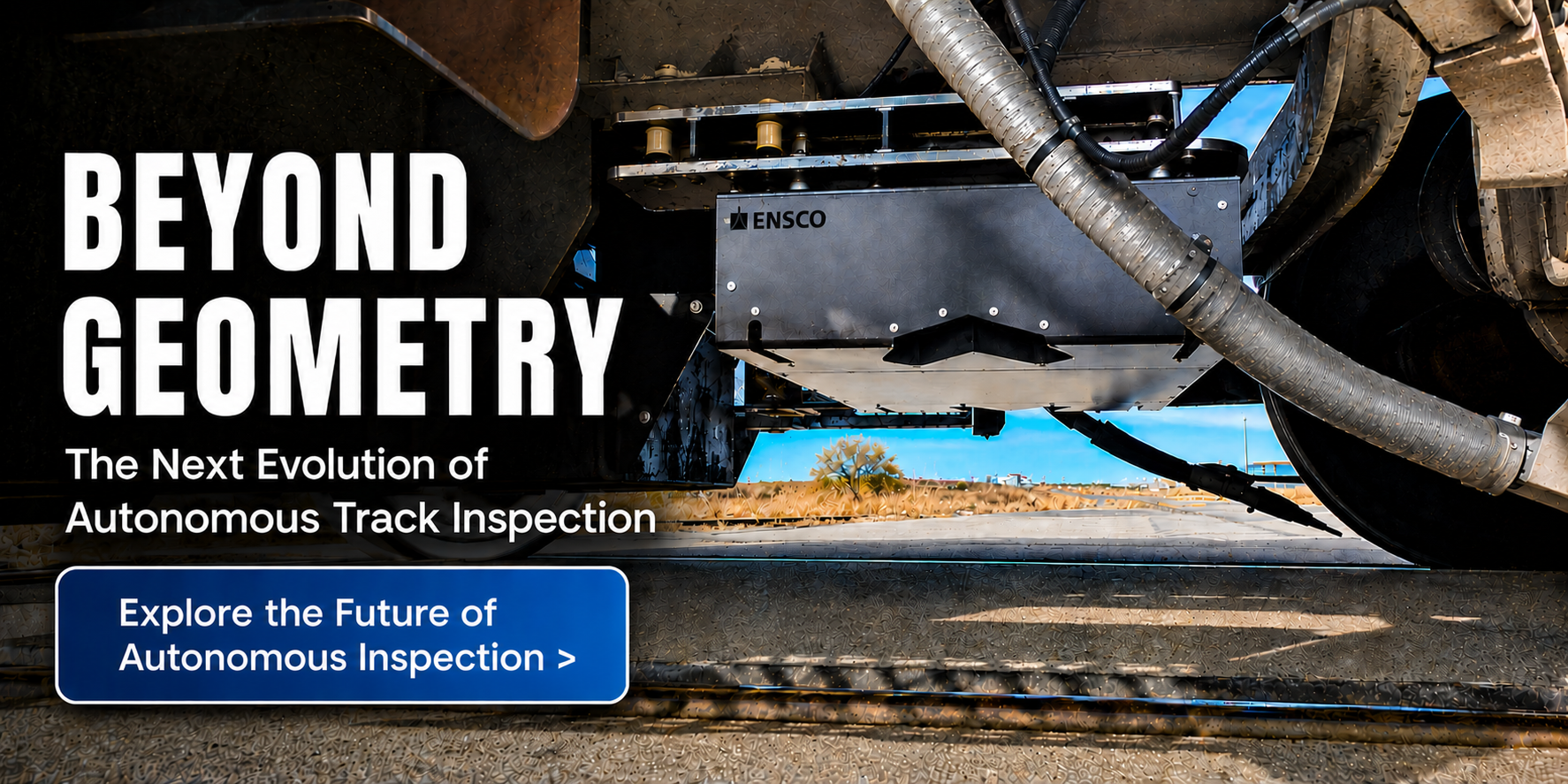
| ENSCO is advancing a Next-Generation Zero-Speed Autonomous Track Geometry Measurement System designed for today’s operating environment. |
 |
 |
|
|
|
|
|
|
|
| |
|
|
| |
Read the full executive perspective to learn how integrated inspection technologies are helping railroads move from measurement to earlier action. |
|
| |
|
|
| |
|
|
|
|
|
|
|
|
|