|
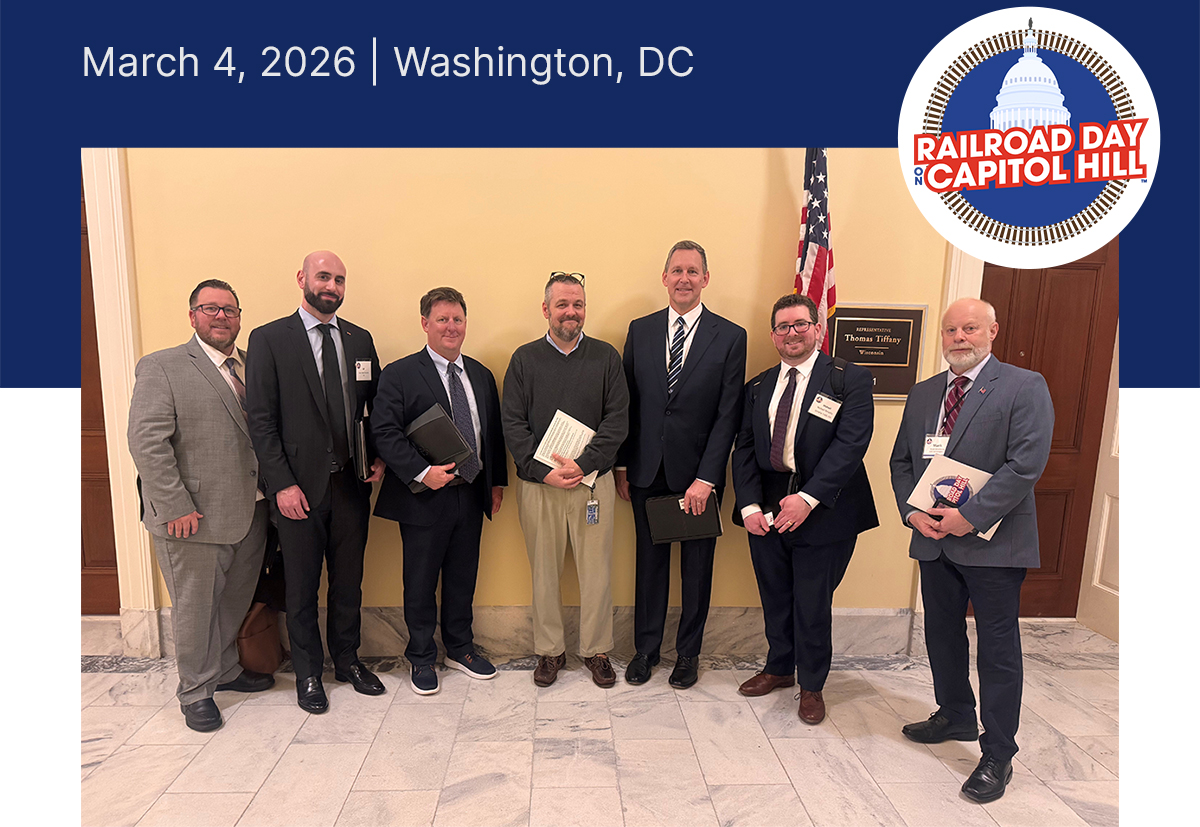
Class I and short line railroads, suppliers and contractors to the industry, and the major Associations that represent them participated in an advocacy tradition spanning over 25 years — Railroad Day on Capitol Hill.
This year, over 380 participants met with more than 330 congressional offices to ensure elected officials understand their perspective when considering important legislation that affects the freight railroad industry. Kirk Bastyr, Publisher of Progressive Railroading, was amongst the nearly 400 present at our nation's capitol.
"This longstanding tradition has continued without interruption, even shifting online during the COVID years," said ASLRRA President Chuck Baker. "The services our industry delivers support tens of thousands of shippers nationwide, helping businesses stay competitive and keeping prices affordable for American families. Railroad Day on Capitol Hill puts a face on the businesses and communities that Congressional actions will impact, making connections that will be invaluable to the industry and to Congress as it considers legislation that will produce powerful outcomes for the public."
Here's a brief recap of what ensued at 2026 Railroad Day at Capitol Hill:
|
1
|
MODERNIZE THE 45G SHORT LINE MAINTENANCE TAX CREDIT
The 45G tax credit has been instrumental in improving safety on short line railroads, addressing the leading cause of derailments — worn out track and ties. First enacted in 2005, and made permanent in 2020, the credit has spurred more than $8B in private infrastructure investment. Over time, inflation has eroded the credit's impact. To continue to drive investment against the $12B backlog, improve safety on short lines, and drive additional economic growth, the credit must be modernized to address inflation.
The ask: Cosponsor and support H.R. 516 and S. 1532, the 45G Tax Credit Modernization Act.
|
|
|
2
|
SUPPORT CRITICAL RAIL SAFETY GRANTS & ENCOURAGE INNOVATIVE TECHNOLOGY DEPLOYMENT
Freight rail is the safest way to move freight over land, and the industry is continually striving to improve. Safety and efficiency improvements should be encouraged by streamlining grant programs and the regulatory process to widely deploy proven technologies. Federal grant programs like CRISI, RCE and Section 130 are essential to keeping railroads — and the communities they serve — safe.
The ask: Guarantee robust, long-term funding for these programs in the next Surface Transportation bill and streamline the regulatory process to encourage safety innovation and the deployment of technologies that have proven to enhance safety and efficiency.
|
|
|
3
|
STREAMLINE FEDERAL PERMITTING TO ACCELERATE INFRASTRUCTURE PROJECTS
Railroads consistently invest in improvements — bridges, terminals, track — but permitting delays can stall projects that enhance safety and efficiency.
The ask: Congress should modernize permitting rules and encourage timely environmental reviews that reflect a project's relative complexity.
|
|
|
4
|
RESTORE THE HTF TO A TRUE USER-BASED SYSTEM AND OPPOSE LONGER AND HEAVIER TRUCKS
Freight railroads invest more than $20 billion annually in their own infrastructure, reducing the burden on taxpayers and removing millions of trucks from our highways. Heavy trucks place significant wear on publicly funded highways, creating costs that are not fully covered by user fees. This imbalance threatens the integrity of our roads and the sustainability of the Highway Trust Fund (HTF). Increasing truck sizes and weights would cause significantly more damage to roads and bridges, further strain the HTF, which already relies heavily on general taxpayer funds, and undermine the competitive balance with freight railroads.
The ask: Congress should oppose increases in federal truck size and weight limits until trucks pay their fair share.
|
Kirk Bastyr
Publisher, International Sales
(414) 228-7701 ext. 333
Mobile: (502) 500-3524
kirk.bastyr@tradepress.com
|